Science · November 8, 2026 · 5 min read
How Long Does It Take to Form a Habit? (It's Not 21 Days)
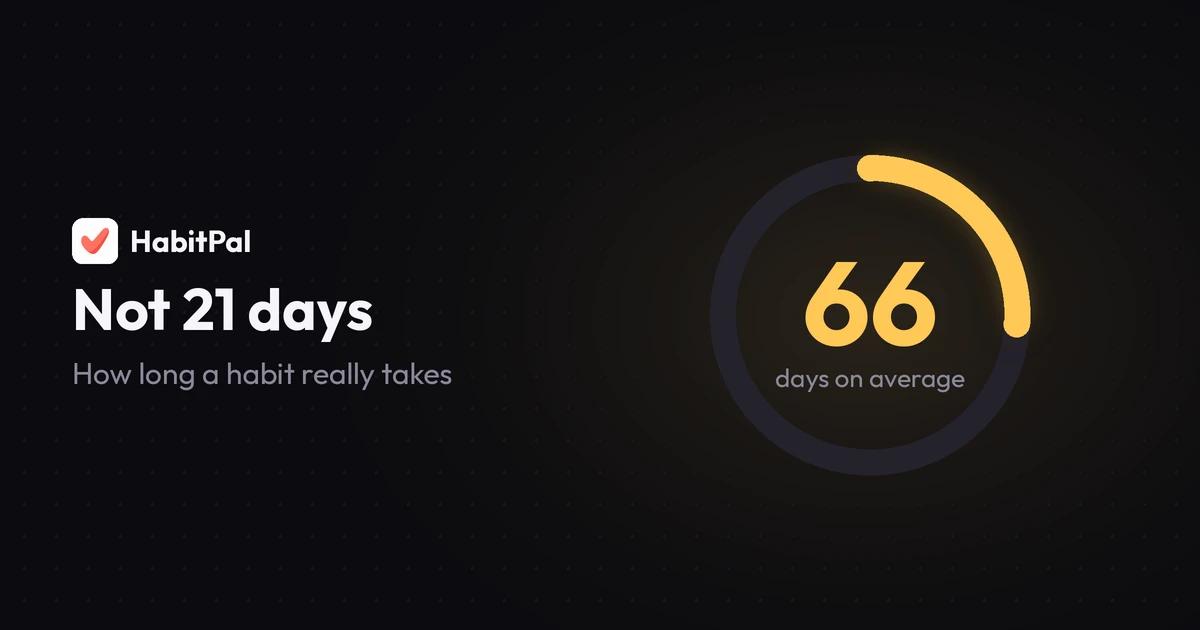
You have probably heard that it takes 21 days to form a habit. It is a nice, round number. It is also not what the research says.
Short answer
Where the "21 days" myth comes from
The idea goes back to Maxwell Maltz, a plastic surgeon who wrote Psycho-Cybernetics in 1960. He noticed his patients took a minimum of about 21 days to get used to a change, like a new face in the mirror. Over time "a minimum of about 21 days" turned into "21 days", and the number stuck.
What the research actually says
The most cited study is by Phillippa Lally and colleagues at University College London, published in the European Journal of Social Psychology in 2010. 96 volunteers each picked a new daily behavior, like drinking water with lunch or running before dinner, and reported every day how automatic it felt.
- The median time to reach peak automaticity was 66 days.
- Individual results ranged from 18 to 254 days.
- Simple habits (a glass of water) got automatic faster than demanding ones (50 sit-ups).
- Missing one day did not significantly hurt the habit-forming process.
So the honest answer is: roughly two months, and longer for harder habits. If you are on day 25 and it still feels like effort, nothing is wrong with you. You are just in the middle.
Why it takes some people longer
- Habit size: "Walk 10 minutes" becomes automatic sooner than "run 5 km".
- A clear cue: habits tied to an existing routine (after brushing your teeth) form faster than ones done "sometime today".
- Consistency: doing it at the same time and place helps your brain link cue and action.
- Reward: habits that feel good right away stick better than ones whose payoff is months away.
How to make a habit stick faster
- Start smaller than feels useful. Two push-ups, one page, one glass of water. Grow it later.
- Attach it to a cue. Use habit stacking: "After I pour my coffee, I will write one line in my journal." See 25 habit stacking examples.
- Make progress visible. A streak or heatmap turns invisible effort into something you can see and protect.
- Never miss twice. One missed day barely matters. Two in a row starts a new pattern. Plan your comeback, not perfection.
- Add a little accountability. A friend who can see your progress, or nudge you, makes skipping less comfortable.

Try HabitPal free
Track your first 66 days: streak flames, a heatmap that fills up day by day, and friends who nudge you when you slip.
FAQ
Is it 21 days or 66 days? The best evidence points to an average of about 66 days. 21 days is a myth based on a loose observation from the 1960s.
Does missing a day ruin a habit? No. In Lally's study, a single missed day did not meaningfully affect habit formation. Just get back on track the next day.
How long to break a bad habit? There is less research on breaking habits, but the same ideas apply: change the cue, make the habit harder to do, and replace it with a better routine.

