Guides · November 7, 2026 · 5 min read
Accountability Partner: Why Habits Stick Better with a Friend
Most habits don't die on a hard day. They die on an ordinary day when nobody would notice if you skipped. An accountability partner changes that one thing: someone notices.
In short
An accountability partner is a person you share a goal with, who checks in on your progress and expects you to show up. It works best when it is light, regular and mutual: a quick check-in, not a lecture.
Why it works
- You make a promise to a person, not just to yourself. Breaking a private promise is easy. Letting a friend down feels different.
- Progress becomes visible. When someone can see your streak, you start protecting it.
- Bad days get shorter. A message from a friend can be the push that turns "skip" into "just five minutes".
- It is more fun. Doing a challenge together turns a chore into a shared game.
How to choose a good partner
- Someone reliable, who will actually check in. Enthusiasm fades, consistency matters.
- Supportive, not judgmental. You want encouragement after a miss, not guilt.
- Ideally working on a habit too. Mutual accountability lasts longer than one-way coaching.
- It doesn't have to be a close friend. A coworker or gym buddy can be perfect.
How to set it up in 5 minutes
- Pick one specific habit each. "Walk 20 minutes a day", not "get healthier".
- Agree on how you'll check in. A daily tap in an app, or a weekly message. Keep it tiny.
- Decide what happens after a miss. The rule that works best: never miss twice in a row.
- Celebrate milestones together: 7 days, 30 days, 100 days.
Doing it with HabitPal
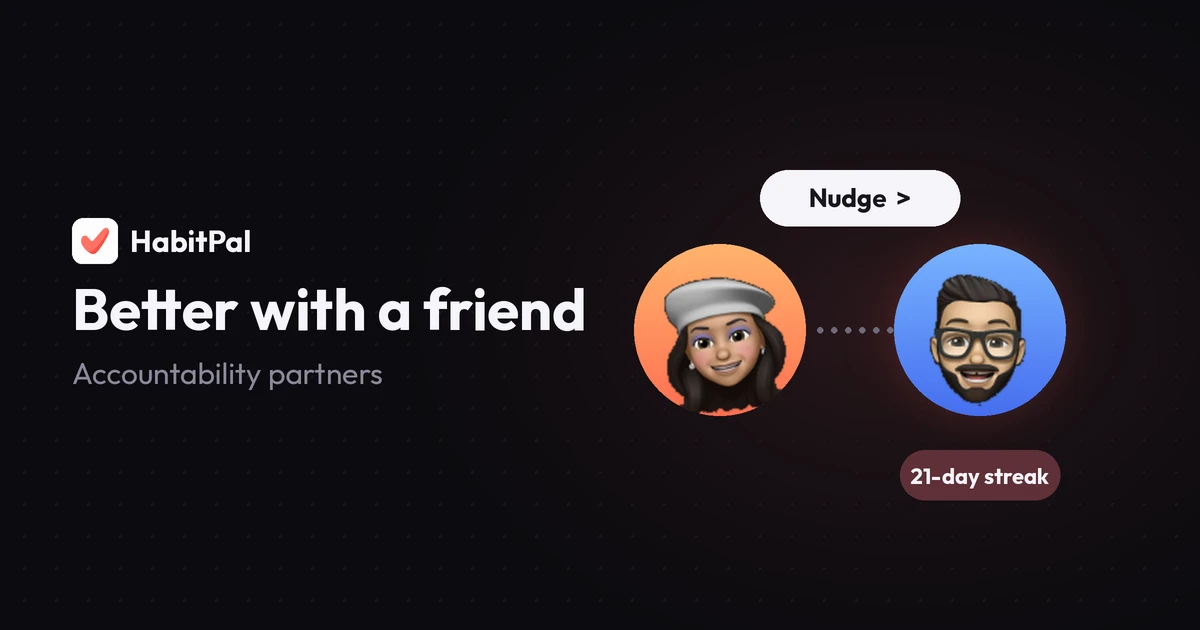
HabitPal was built around this idea. Share a habit with a friend and you both see each other's progress and streaks. If they haven't checked in yet, send a nudge: a small push notification that says "your streak is waiting". It is the lightest possible version of accountability, and it works because it takes two seconds.
Want the science on how long the whole process takes? Read how long it really takes to form a habit.

Try HabitPal free
Share habits with friends, see each other's streaks and send a nudge when someone slips.

